
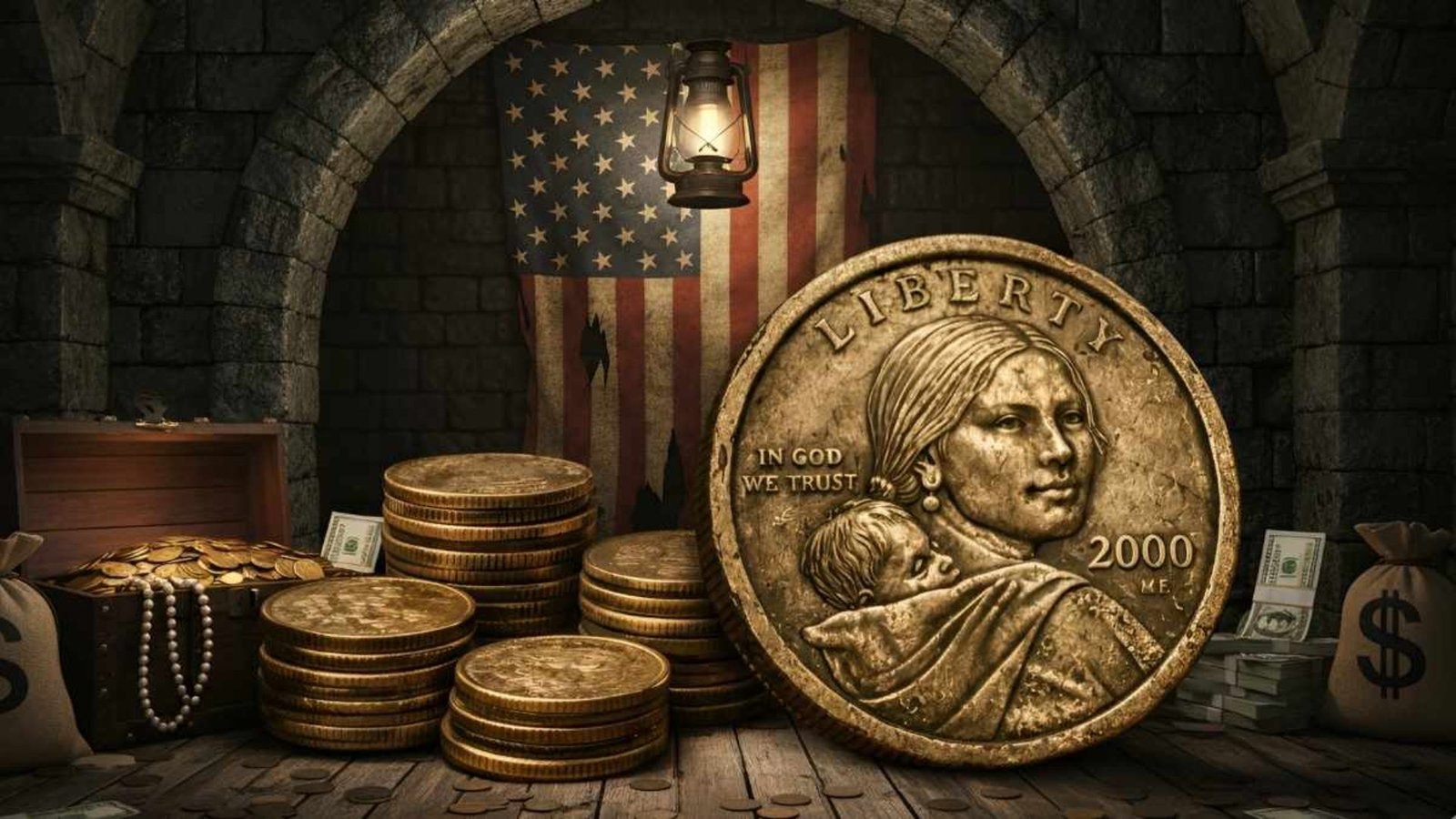
Have you ever dug through your pocket change and wondered if that shiny golden dollar could be worth a fortune? The Sacagawea dollar might look ordinary, but rare versions have stunned collectors by fetching prices as high as $2.1 million. In this guide, we’ll explore why these coins captivate hobbyists, what drives their jaw-dropping value, and how you might spot a hidden gem in 2026. Keep reading to discover the history, rarities, and tips that could turn your loose change into serious money.
What Is the Sacagawea Dollar?
The Sacagawea dollar is a golden-colored $1 coin honoring Sacagawea, the Shoshone woman who guided Lewis and Clark. Minted since 2000, it features her portrait with her infant son on the obverse and an eagle (later Native American themes) on the reverse. From 2009 onward, it’s often called the Native American dollar with changing reverses.
History and Origin of the Sacagawea Dollar
Introduced in 2000 to replace the Susan B. Anthony dollar, it aimed for better circulation with its manganese-brass cladding. The design celebrates Sacagawea’s role in American exploration. Early promotions, like Cheerios boxes, released special versions before the public launch, creating instant rarities.
Why Sacagawea Dollars Are Valuable Today
Most circulate at face value, but rarity, errors, condition, and historical quirks drive huge premiums. In 2026, collector interest in modern errors remains strong, especially with ongoing Native American dollar releases honoring tribes like the Oneida Allies.
Rare Varieties and Record Prices
The most famous rarities include:
- 2000-P Cheerios Dollar (enhanced eagle feathers from promotion)
- Mule errors (wrong reverse, like State quarter or Presidential dollar)
- Wounded Eagle die varieties
- Space-flown gold patterns (not standard Sacagawea but related)
Some ultra-rare anomalies or extreme errors have reportedly hit $2.1 million in recent valuations, though top auction records for standard errors range from tens to hundreds of thousands.
Sacagawea Dollar Values in 2026
Common vs. Rare Sacagawea Dollar Values
| Type | Condition/Mint | Approximate Value (2026) |
|---|---|---|
| Standard Circulation | Circulated | $1 – $5 |
| Uncirculated Common | MS65+ | $5 – $50 |
| Proof Versions | Proof | $5 – $200 |
| 2000-P Cheerios | High Grade | Thousands to $8,000+ |
| Major Mule Errors | Certified | $50,000 – $200,000+ |
| Ultra-Rare Anomaly | Unique/Extreme | Up to $2.1 Million |
2026 Native American Dollar Releases
| Mint | Design Theme | Typical Value (Uncirculated) |
|---|---|---|
| P | Oneida Allies at Valley Forge | $2 – $4 |
| D | Oneida Allies at Valley Forge | $2 – $4 |
How to Check Your Coins and Start Collecting
Examine your Sacagawea dollars closely. Look for crisp details, mint marks (P, D, S), and errors like mismatched designs or die flaws. Use grading services like PCGS or NGC for certification. Start small by searching rolls from banks or joining coin clubs to build your collection.
Expert Tips for Spotting Rarities
- Compare eagle tail feathers on 2000 coins for Cheerios variety sharpness.
- Check for mule errors where the reverse doesn’t match.
- Store coins properly to preserve condition.
- Follow auction sites for market trends.
- Get suspicious coins appraised professionally.
Frequently Asked Questions (FAQs)
Q: Are 2026 Sacagawea dollars rare?
A: Standard 2026 releases are common at $2–$4 uncirculated, but watch for any future errors.
Q: How can a $1 coin reach $2.1 million?
A: Extreme rarity from mint anomalies, low survival, and collector demand push values sky-high for unique pieces.
Q: Where can I sell a rare Sacagawea dollar?
A: Trusted auctions like Heritage or Stack’s Bowers, or certified dealers.
The Sacagawea dollar proves that history and chance can hide in everyday items. Whether you’re a casual hobbyist or serious collector, understanding these rarities adds excitement to coin hunting. Check your change today, share this guide with friends, and dive deeper into numismatics—you never know what treasure awaits!