
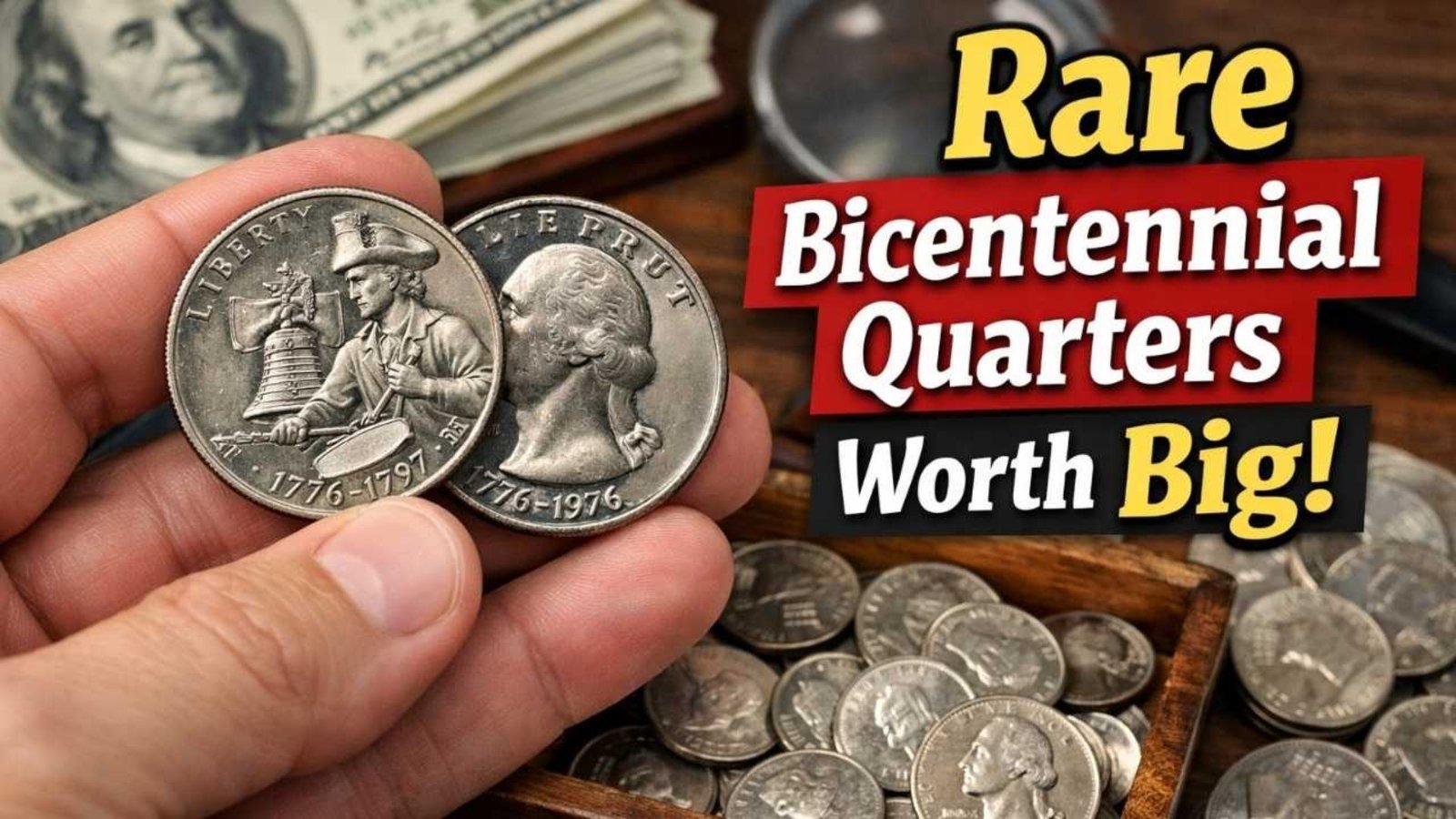
The 1976 Bicentennial Quarter, also known as the 1776-1976 Bicentennial Quarter, was issued to celebrate America’s 200th anniversary of independence. It features George Washington on the obverse and a colonial drummer boy on the reverse, with the dual date 1776-1976. Most are common clad coins worth 25 cents, but rare errors, high-grade examples, and silver editions can fetch big money from collectors.
Have you ever checked your change jar and spotted one of these patriotic coins? You might be sitting on a small fortune without knowing it. In this guide, we’ll explore the rare Bicentennial quarters worth money, including silver varieties, famous errors, and current prices. Keep reading to learn how to spot them and why they’re so valuable today.
Introduction to the Bicentennial Quarter
The U.S. Mint released these special quarters in 1975 and 1976. Over 1.6 billion were made across Philadelphia (no mint mark), Denver (D), and San Francisco (S). The reverse design honors the nation’s birthday with a drummer boy, making it a favorite among rare coin enthusiasts and hobbyists.
History and Background
In 1976, America marked its bicentennial with special coin designs. Quarters, half dollars, and dollars got temporary reverses. The quarter’s clad versions (copper-nickel) went into circulation, while 40% silver proofs and some uncirculated sets were sold to collectors. This mix created lasting interest in rare Bicentennial quarters.
Why It’s Valuable Today
Most circulated coins stay at face value, but rarity drives prices up. Silver content adds melt value (around $5-10+ depending on silver prices), high grades boost appeal, and errors create one-of-a-kind pieces. In 2025-2026, collector demand keeps pushing values higher for top examples.
Silver Editions vs. Clad Versions
The big difference? Composition. Clad quarters are common and cheap. Silver ones (40% silver, minted in San Francisco) are rarer and more valuable due to limited production for sets.
Here’s a quick comparison:
| Type | Composition | Mint | Typical Value (Circulated/Uncirculated) | Key Notes |
|---|---|---|---|---|
| Clad (Regular) | Copper-nickel | P, D | $0.25 – $5 | Most common in change |
| Silver Uncirculated | 40% Silver | S | $8 – $50+ | From mint sets |
| Silver Proof | 40% Silver | S | $10 – $100+ (higher in MS/PR grades) | Mirror-like finish |
| High-Grade Silver | 40% Silver | S | Up to $19,200 (MS69 example) | Record auction prices |
Rare Errors and Varieties
Minting mistakes make some quarters stand out. Look for doubled die obverse (doubling on “Liberty” or date), off-center strikes, wrong planchet errors, or struck-through issues. A famous doubled die variety on 1976-D shows extra thickness on letters. Dramatic errors like double denomination (struck on a dime) have sold for thousands.
Another table of notable rare examples:
| Rare Variety/Error | Description | Estimated Value Range |
|---|---|---|
| Doubled Die Obverse (DDO) | Doubling on date/letters | $100 – $5,000+ |
| Off-Center Strike | Design shifted significantly | $50 – $1,000+ |
| Wrong Planchet (e.g., on dime) | Struck on incorrect metal | $5,000 – $15,000+ |
| High-Grade Silver (MS69) | Pristine condition | $5,000 – $19,200 |
| Silver Proof Errors | Proof with mint mistakes | $1,000 – $13,500 |
Expert Tips for Collectors
Start by checking the mint mark (under the date) and edge for silver (solid color, no copper stripe). Weigh silver ones—they’re heavier at 5.75 grams vs. 5.67 for clad. Use a magnifier for errors. Get rare finds graded by PCGS or NGC for max value. Join coin forums or shows to learn more—it’s a fun hobby that can pay off!
Frequently Asked Questions (FAQs)
Are all 1776-1976 quarters valuable?
No—most are worth 25 cents unless they’re silver, high-grade, or have errors.
How do I tell if my Bicentennial quarter is silver?
Check the edge for solid silver (no reddish copper). Silver versions weigh more and often come from sets.
What’s the most expensive Bicentennial quarter sold?
A top-grade 1976-S silver regular strike hit $19,200 at auction.
Where can I sell a rare one?
Try reputable dealers, eBay (with certification), or auctions like Heritage or Stack’s Bowers.
These rare Bicentennial quarters remind us how history hides in everyday pocket change. Whether you’re a hobbyist hunting errors or just curious about silver editions, checking your coins could uncover real treasure. Grab a magnifying glass, examine those 1776-1976 pieces, and who knows—you might find one worth big money. Share your finds in the comments or explore more rare coin guides!