
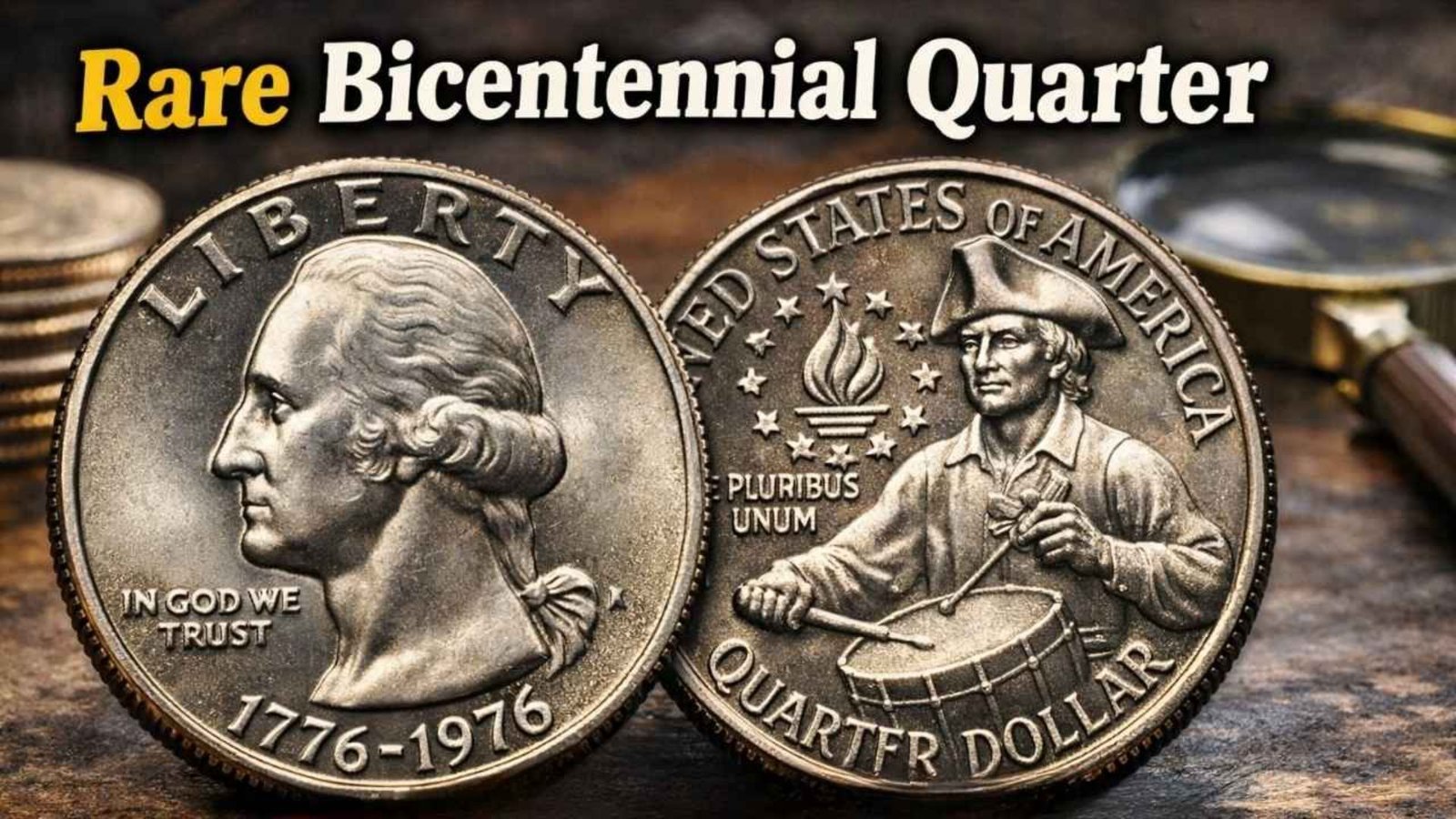
The 1976 Bicentennial Quarter—also known as the Drummer Boy Quarter—celebrates America’s 200th birthday with its unique colonial drummer reverse design. Most circulate at just 25 cents, but rare errors, high-grade examples, and special varieties have fetched thousands at auction.
Some viral claims push values to $5 million for extreme rarities like wrong planchet strikes or unique errors, sparking excitement among collectors. Could one be hiding in your pocket change? Read on to discover the truth, spot the gems, and learn how to check your coins.
The 1976 Bicentennial Quarter: What Makes It Special?
In 1976, the U.S. Mint released special quarters (and half dollars and dollars) to honor the nation’s bicentennial. The reverse shows a colonial drummer boy instead of the usual eagle. These coins bear the dual date “1776-1976” and come in clad (copper-nickel) or 40% silver versions from San Francisco.
Most are common, but errors or perfect condition turn ordinary pocket change into treasure.
History and Origin
The U.S. Mint produced over 1.6 billion clad quarters and millions of silver ones for the 1976 celebration. Philadelphia and Denver minted clad versions without mint marks (or subtle ones), while San Francisco handled proofs and silver uncirculated coins.
The design by Jack L. Ahr won a national contest. It was a one-year-only feature—making it a favorite for history buffs and rare coin enthusiasts.
Why Some Are Extremely Valuable Today
High demand from collectors drives prices up for top-condition or error coins. Regular circulated ones stay at face value, but:
- Perfect uncirculated examples shine.
- Silver versions carry melt value plus premium.
- Major errors (like wrong planchet or multi-strikes) create legends.
Viral stories claim $5 million for ultra-rare prototypes or extreme errors, though verified sales top out lower—still impressive for a quarter!
How to Check Your Loose Change
Grab a magnifying glass and examine:
- Look for the drummer boy reverse and 1776-1976 date.
- Check the edge: Silver versions have no copper stripe.
- Inspect for errors: doubled lettering, off-center strikes, or unusual thickness.
- Note mint mark (S for San Francisco, none or weak for Philly/Denver).
If anything looks odd, don’t spend it—get it appraised!
Notable Facts, Statistics, and Records
Here are key varieties and real-world values:
Common vs. Rare Bicentennial Quarter Values
| Variety/Type | Condition | Approximate Value | Notes |
|---|---|---|---|
| Standard Clad (P or D) | Circulated | $0.25 – $1 | Everyday pocket change |
| Clad Uncirculated | MS65+ | $2 – $10 | Nice luster |
| 1976-S Silver Proof | PR69 Deep Cameo | $10 – $30+ | 40% silver |
| 1976-S Silver (High Grade) | MS69 | Up to $19,200 | Record auction sale |
| Doubled Die Obverse | Fine to Unc | $200 – $1,000+ | Visible doubling on date/letters |
| Major Error (e.g., Off-Center or Wrong Planchet) | Varies | $3,000 – $15,000+ (or higher for extreme rarities) | Viral claims reach millions for uniques |
Top Auction Highlights
- 1976-S Silver MS69: $19,200
- 1976-D Doubled Die: $8,400
- Various proof/errors: $2,000–$9,000+
Extreme rarities fuel $5 million rumors, but most verified highs are in the five-figure range.
Expert Tips for Spotting and Valuing Rare Coins
- Use good lighting and a loupe to spot doubling or misalignments.
- Weigh the coin: Silver ones are heavier (~6.25g vs. 5.67g clad).
- Submit suspects to PCGS or NGC for grading—boosts value.
- Avoid cleaning coins; it reduces worth.
- Join forums or local clubs for advice from hobbyists.
Start small—your change jar could hold surprises!
Frequently Asked Questions (FAQs)
Are all 1976 Bicentennial quarters rare?
No—most are common and worth face value unless in top condition or with errors.
What makes a Bicentennial quarter worth millions?
Ultra-rare errors like wrong planchet strikes or unique prototypes inspire high claims, though most sales are thousands.
How do I sell a potentially rare one?
Get it graded first, then use auctions like Heritage or eBay for certified coins.
Is the $5 million Bicentennial quarter real?
Viral stories hype extreme rarities, but documented records are lower—still exciting for collectors!
Conclusion
The rare Bicentennial quarter reminds us that history hides in everyday items. While a $5 million find is unlikely, valuable errors or pristine examples can deliver real rewards. Dig through your change, check for that drummer boy, and you might uncover a small fortune. Share this with friends who love coin collecting—happy hunting, and who knows what you’ll find next! Keep scrolling coin communities for more tips.