
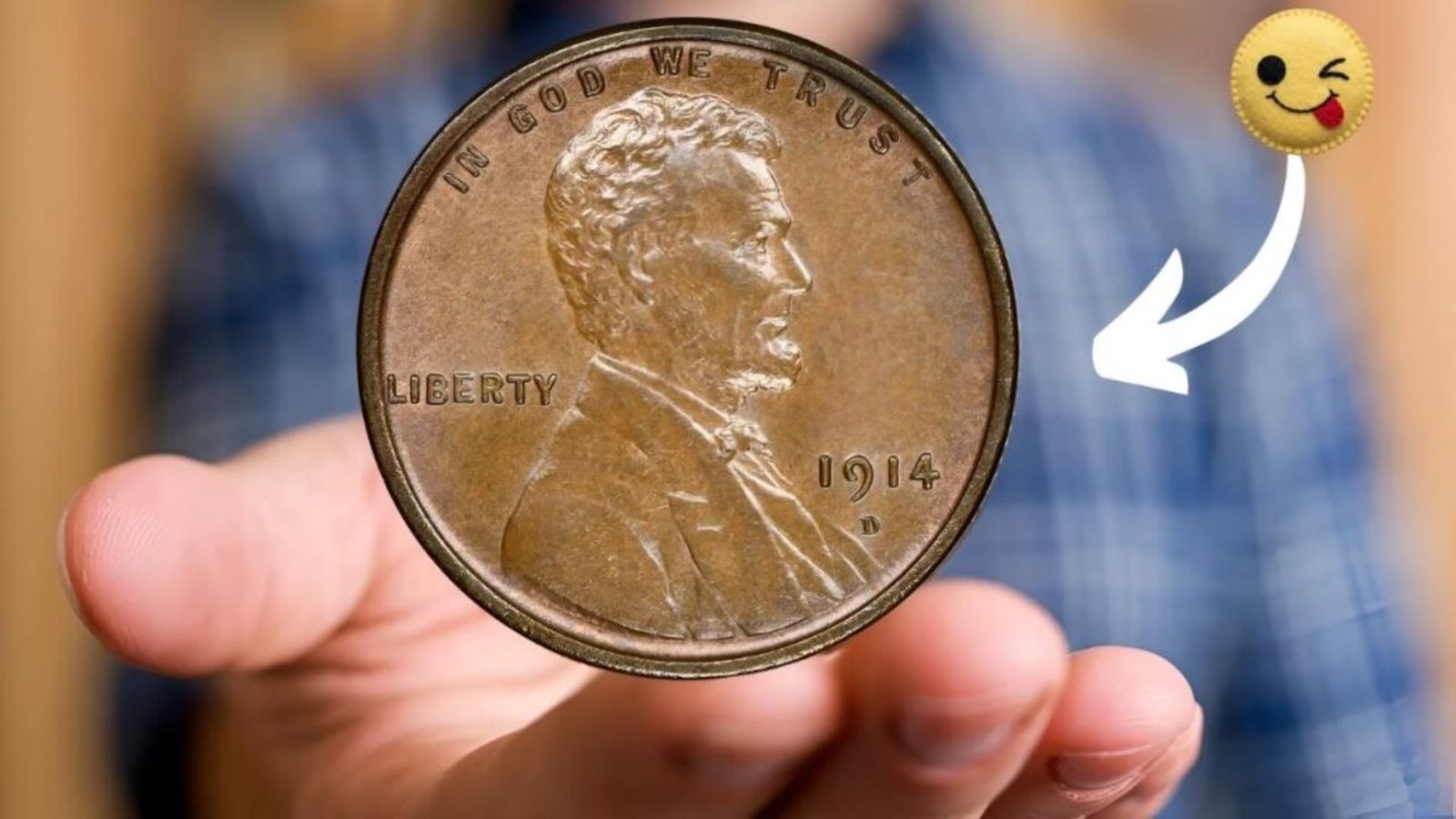
The 1943 Copper Lincoln Wheat Penny stands out as one of the most legendary rarities in coin collecting. Often hyped in headlines as potentially worth millions (with some sensational claims reaching exaggerated figures like $15 million in myths or private estimates), the real star is the ultra-rare 1943 bronze (copper) error penny—especially the unique 1943-D version.
Introduction: Could Your Pocket Change Hide a Fortune?
Imagine digging through your loose change or old jar and finding a single penny worth more than a luxury car—or even a house. That’s the thrill of rare coin hunting! The rare Lincoln Wheat Penny, particularly the famous 1943 copper version, has collectors buzzing. These historic coins from the 1909–1958 series honor Abraham Lincoln and feature wheat stalks on the reverse. One tiny wartime mistake turned a humble cent into a multi-million-dollar treasure. Stick around as we dive into its story, value, and how you can spot one yourself.
What Is the Rare 1943 Copper Lincoln Wheat Penny?
The Lincoln Wheat Penny (or Wheat Cent) was minted from 1909 to 1958. Most 1943 pennies are steel-coated zinc (to save copper for WWII). But a handful were mistakenly struck on leftover bronze planchets—creating the 1943 copper penny, one of the rarest U.S. coins.
History and Origin
In 1909, the U.S. Mint released the Lincoln cent to mark Abraham Lincoln’s centennial, designed by Victor David Brenner. The “wheat” reverse symbolized prosperity. By 1943, copper shortages led to steel pennies. A few bronze blanks from 1942 slipped through, producing accidental copper versions at Philadelphia, Denver, and San Francisco mints.
Why It’s So Valuable Today
Rarity drives the price. Only about 20–30 authentic 1943 bronze pennies exist across all mints, with the 1943-D (Denver) being uniquely one-of-a-kind. High-grade examples fetch huge sums due to collector demand and historical intrigue.
| Mint Mark | Known Examples | Recent/Estimated Value (High Grade) | Notes |
|---|---|---|---|
| 1943 (No Mintmark, Philadelphia) | ~10–15 | $100,000 – $1.7+ million | Most common of the errors |
| 1943-D (Denver) | 1 known | Up to $2.3 million+ (in mint state) | Ultra-rare; sold for $1.7M in 2010 |
| 1943-S (San Francisco) | ~5–10 | $100,000 – $1+ million | Scarce but multiple known |
How Readers Can Engage and Benefit
Start simple: Grab a magnet! Normal 1943 pennies stick (steel), but the rare copper ones don’t. Check old jars, family collections, or pocket change. If you find a suspect:
- Don’t clean it (harms value).
- Get it authenticated by PCGS or NGC.
- Sell via auction houses like Heritage for max profit.
Hobbyists enjoy the hunt—join forums, attend shows, or build a set of Wheat pennies.
Notable Facts and Records
- One 1943-D bronze sold for $1.7 million in 2010; valued at $2.3 million in top condition today.
- Related rarity: 1944 steel pennies (opposite error) can hit $100,000–$1+ million.
- Sensational claims of $15 million+ often stem from hype or unverified private sales, but proven auction highs top $2 million.
| Famous Sales | Year | Price | Grade/Source |
|---|---|---|---|
| 1943-D Bronze | 2010 | $1.7 million | Private sale |
| Various 1943 Bronze | Recent | $840,000+ | Auction |
| 1944 Steel Example | Recent | $490,500 | Record for type |
Expert Tips and Insights
Look for:
- No magnetic attraction.
- Copper color (not silver-steel).
- Proper weight (~3.11g vs. steel’s ~2.7g).
Avoid fakes—many altered 1943 steel pennies are copper-plated. Consult a pro grader for certainty.
Frequently Asked Questions (FAQs)
Is there really a Lincoln Wheat Penny worth $15 million?
Not quite—top verified values hover around $1–2.3 million for the rarest 1943 copper errors. Higher figures are often exaggerated online myths.
How can I tell if my 1943 penny is rare?
It shouldn’t stick to a magnet and should look bronze, not silver.
Are other Wheat pennies valuable?
Yes—key dates like 1909-S VDB ($15,000+) or 1914-D ($10,000+) reward collectors.
Where should I sell a rare penny?
Reputable auctions (Heritage, Stack’s Bowers) or certified dealers for best returns.
The rare Lincoln Wheat Penny—especially the 1943 copper error—reminds us that history hides in everyday items. While a $15 million payday is unlikely, discovering one could change your life. Dig through that change jar today, share your finds with fellow collectors, and keep the thrill of the hunt alive. Who knows? Your next penny might be a winner!